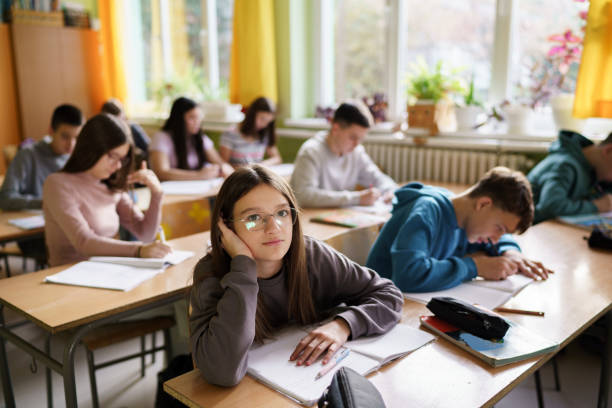
I still remember sitting in the last bench during my second year of college, pretending to take notes while actually counting how many ceiling fans were spinning. That’s not even a joke. Somewhere between the third monotonous lecture of the day and a chalk-dusted blackboard that hadn’t changed since my parents’ time, I realized something was off. Learning wasn’t supposed to feel like waiting in a long bank queue just to update a passbook no one uses anymore.
Traditional classes aren’t exactly dying, but yeah, they’re definitely losing their grip on students. And it’s not because students suddenly became lazy or addicted to phones, like some teachers love to say. It’s deeper than that, and honestly, a bit uncomfortable to admit.
The classroom feels frozen in time
Walk into most classrooms today and then look at how fast the rest of the world is moving. It’s like stepping out of a Tesla and hopping onto a bullock cart. Same benches. Same lectures. Meanwhile students are watching creators on YouTube break down complex topics in ten minutes with visuals, jokes, and real-life examples that actually make sense.
I once learned more about economics from a random Instagram reel than from a whole week of lectures. That sounds ridiculous, but also… kind of true. When your brain is used to fast, engaging content, a one-way lecture feels like listening to radio static.
Too much theory, too little life
Another big problem is how disconnected traditional classes feel from real life. Students keep asking the same question, sometimes out loud, sometimes silently. Where am I ever going to use this?
Imagine learning how to swim by reading a textbook about water. That’s what many classes feel like. Tons of theory, formulas, definitions, and very little application. Exams become the goal, not understanding. And once the exam is over, everything leaks out of your brain like a cracked bucket.
I messed up an entire semester because I memorized answers instead of understanding them. Got decent marks, forgot everything in three months. That’s not education, that’s short-term storage.
Attention spans aren’t dead, they’re just selective
There’s a popular belief that students today have “short attention spans.” I don’t fully buy that. These same students will binge-watch a six-hour web series without blinking. They’ll spend hours learning a video game strategy or editing a reel until it’s perfect.
So the issue isn’t attention. It’s interest.
Traditional classes rarely compete for attention. No interaction, no storytelling, no sense of curiosity. Just slides, lectures, and silence. If learning feels like punishment, the brain naturally looks for an exit.
Pressure kills curiosity
Grades, ranks, attendance, internal marks. Everything is measured, tracked, and compared. Learning starts feeling like a performance review instead of a process. One wrong answer and suddenly you’re “weak” in the subject.
I’ve seen genuinely curious students stop asking questions because they didn’t want to sound stupid in front of the class. That fear sticks. When curiosity dies, interest follows right behind.
Financially speaking, it’s like investing only to avoid loss, never to grow. Safe, boring, and not very rewarding.
The internet changed expectations, classrooms didn’t
Students today grow up with Google, forums, AI tools, and communities that answer questions instantly. They’re used to feedback, personalization, and flexibility. Traditional classrooms still run on fixed schedules, fixed syllabi, and one-size-fits-all teaching.
Online, if one explanation doesn’t work, you just switch videos. In class, you’re stuck. If you miss one lecture, good luck catching up without feeling lost for weeks.
Social media is full of students openly saying things like “I learned more from Reddit than from my professor.” That’s not disrespect. That’s frustration speaking.
Teachers aren’t the enemy, the system is
This part matters. Most teachers I’ve met genuinely care. They’re smart, experienced, and often overworked. But they’re stuck inside a rigid system that rewards syllabus completion over student understanding.
Some teachers want to try new methods but are limited by time, class size, or outdated rules. It’s like asking a chef to cook gourmet food using only a microwave.
Blaming teachers is easy. Fixing the system is hard.
Students want relevance, not just routine
A lot of students aren’t asking for easier education. They’re asking for meaningful education. Show them how a concept connects to real jobs, real problems, real life.
When learning feels useful, interest comes back naturally. When it feels like an endless loop of exams and notes, motivation drops fast.
I once attended a workshop where the speaker linked basic math to everyday money decisions. Budgeting, loans, even online shopping traps. That single session made more impact than months of regular classes.
So yeah, traditional classes need a rethink
This doesn’t mean classrooms should disappear. Physical spaces still matter. Human interaction still matters. But the approach needs to evolve.
More discussion. More practical examples. Less fear. Less robotic teaching.
Students aren’t losing interest in learning. They’re losing interest in how learning is being delivered.
And honestly, if I had to choose between a dull lecture and a well-explained video that respects my time and curiosity, I know what my brain would pick. And I don’t think I’m alone.